

Adam Rosen - Lead financial writer
Price action trading in Yemen is a strategy used by Yemeni traders for predicting market movements by recognising patterns or'signals' in underlying Yemeni and international market fluctuations.
The change in the price of an financial asset in Yemen, such as a share, currency pair, cryptocurrency, or commodity, is ultimately what determines whether a profit or loss is realised got Yemeni traders. Yemeni traders who opt to concentrate solely on price charts in Yemen will be required to devise a price action strategy specific to each security or asset in which they have an interest in investing in from Yemen.
Yemeni investors stand to significantly increase their returns on investments if they have a solid grasp of the mechanisms underlying price action trading when trading in Yemen. We explore the strategies and indicators that will help Yemeni traders in building a successful price trading strategy.
Price action trading in Yemen is a trading method in which decisions are made by Yemeni traders based on the movement of prices on charts, instead of using technical indicators on Yemeni trading platforms. Price action traders in Yemen, on the other hand, ignore traditional fundamental analysis and focus solely on the history of prices to determine trading strategies in Yemen.
The market sentiment of all the Yemeni traders who are trading the market are reflected in the price charts. Because the only thing Yemeni traders are focusing on is the price movement in Yemen, the price action charts will make it abundantly clear if there has been a sudden and significant increase in the price.
This occurs as a result of the bulls (Yemeni and international buyers) having control over the bears (Yemeni and international sellers), which results in an arbitrage opportunity between the two parties in or outside Yemen.
The practise of Yemeni traders, trading without the use of any technical indicators in Yemen, such as moving averages, relative strength index, or stochastic, is referred to as naked trading by Yemeni traders and is a price action strategy. In this scenario, candlesticks are analysed collectively by Yemeni traders in order to supply accurate entry signals to traders in Yemen who are looking for new entry points.

🤴 IC Markets is Used By: 180,000
⚡ IC Markets is Regulated by: Australian Securities and Investments Commission (ASIC), Financial Services Authority (FSA), Cyprus Securities and Exchange Commission (CySEC)
💵 What You Can Trade with IC Markets: Forex, Majors, Energies, Metals, Agriculturals,
💵 Instruments Available with IC Markets: 232
📈 IC Markets Inactivity Fees: No
💰 IC Markets Withdrawal Fees: No
💰 IC Markets Payment Methods: Credit Cards, VISA, MasterCard, Debit Cards, Visa, MasterCard, Bank Transfer, PayPal, Neteller, Neteller VIP, Skrill, Poli, Cheque, BPAY, UnionPay, FasaPay, QIWI, RapidPay, Klarna, Electronic wallets (eWallets), Broker to Brokers, Thai Internet Banking, Vietnamese Internet Banking,
IC Markets Risk warning : Losses can exceed deposits

🤴 Roboforex is Used By: 10,000
⚡ Roboforex is Regulated by: RoboForex Lid is regulated by Belize FSC, License No. 000138/7, reg. number 000001272
💵 What You Can Trade with Roboforex: Forex, Minors, Majors, Exotics, Indices, Metals,
💵 Instruments Available with Roboforex: 100
📈 Roboforex Inactivity Fees: No
💰 Roboforex Withdrawal Fees: Yes
💰 Roboforex Payment Methods: Credit cards, VISA, MasterCard, JCB, Debit cards, Bank Transfer, Electronic wallets (eWallets), Neteller, Skrill, Perfect Money, AdvCash, BPAY, China UnionPay, FasaPay, CashU, WeChat Pay, ecoPayZ, AstroPay, Sofort, Giropay, Poli, Wepay, iDEAL, Payoneer,
Roboforex Risk warning : Losses can exceed deposits
🤴 AvaTrade is Used By: 200,000
⚡ AvaTrade is Regulated by: Central Bank of Ireland, Australian Securities and Investments Commission (ASIC), Financial Services Authority (FSA), South African Financial Sector Conduct Authority (FSCA), Financial Stability Board (FSB), Abu Dhabi Global Markets (ADGM), Financial Regulatory Services Authority (FRSA), British Virgin Islands Financial Services Commission (BVI)
💵 What You Can Trade with AvaTrade: Forex, Minors, Cryptocurrencies, Majors, Exotics, Indices, UK Stocks, US Stocks, Energies, Metals, Agriculturals, ETFs, IPO, Bonds,
💵 Instruments Available with AvaTrade: 1000
📈 AvaTrade Inactivity Fees: No
💰 AvaTrade Withdrawal Fees: No
💰 AvaTrade Payment Methods: Credit cards, VISA, MasterCard, Bank Transfer, Electronic wallets (eWallets), PayPal, Neteller, WebMoney, Payoneer,
AvaTrade Risk warning : 71% of retail CFD accounts lose money

🤴 FP Markets is Used By: 10,000
⚡ FP Markets is Regulated by: Australian Securities and Investments Commission (ASIC), Cyprus Securities and Exchange Commission (CySEC), Financial Services Authority (St. Vincent and the Grenadines)
💵 What You Can Trade with FP Markets: Forex, Minors, Majors, Exotics, Indices, Metals,
💵 Instruments Available with FP Markets: 100
📈 FP Markets Inactivity Fees: No
💰 FP Markets Withdrawal Fees: No
💰 FP Markets Payment Methods: Credit cards, VISA, MasterCard, Debit cards, Bank Transfer, Electronic wallets (eWallets), Neteller, BPAY, POLi, PayPal, Neteller, Skrill, PayTrust, NganLuong VN, Fasapay, Broker to Broker, OnlinePay China, Directa24, Klarna, PayTrust88, Payoneer,
FP Markets Risk warning : Losses can exceed deposits
🤴 NordFX is Used By: 10,000
⚡ NordFX is Regulated by: Cyprus Securities and Exchange Commission (CySEC), License No: 209/13
💵 What You Can Trade with NordFX: Forex, Majors, Metals,
💵 Instruments Available with NordFX: 50
📈 NordFX Inactivity Fees: No
💰 NordFX Withdrawal Fees: No
💰 NordFX Payment Methods: Bank Transfer, Neteller, PerfectMoney, WebMoney, FasaPay, CashU, Payza, QIWI,
NordFX Risk warning : Losses can exceed deposits
🤴 XTB is Used By: 250,000
⚡ XTB is Regulated by: Financial Conduct Authority (FCA), FCA number FRN 522157, Cyprus Securities and Exchange Commission (CySEC), CySEC Licence Number: 169/12, Comision Nacional del Mercado de Valores, Komisja Nadzoru Finansowego, Belize International Financial Services Commission (IFSC) under license number IFSC/60/413/TS/19, Polish Securities and Exchange Commission (KPWiG), Dubai Financial Services Authority (DFSA), Dubai International Financial Center (DIFC),Financial Sector Conduct Authority (FSCA), XTB AFRICA (PTY) LTD licensed to operate in South Africa
💵 What You Can Trade with XTB: Forex, Minors, Cryptocurrencies, Majors, Exotics, Indices, UK Stocks, US Stocks, Pennystocks, Energies, Metals, Agriculturals, ETFs,
💵 Instruments Available with XTB: 4000
📈 XTB Inactivity Fees: Yes
💰 XTB Withdrawal Fees: No
💰 XTB Payment Methods: Credit cards, MasterCard, Maestro, Visa, Debit cards, Bank Transfer, Electronic wallets (eWallets), PayPal, Neteller, Skrill, Poli, Paysafe, Payoneer,
XTB Risk warning : 76% - 83% of retail investor accounts lose money when trading CFDs with this provider. You should consider whether you understand how CFDs work and whether you can afford to take the high risk of losing your money.

🤴 Pepperstone is Used By: 89,000
⚡ Pepperstone is Regulated by: Financial Conduct Authority (FCA), Australian Securities and Investments Commission (ASIC), Cyprus Securities and Exchange Commission (CySEC), Federal Financial Supervisory Authority (BaFin), Dubai Financial Services Authority (DFSA), Capital Markets Authority of Kenya (CMA), Pepperstone Markets Limited is incorporated in The Bahamas (number 177174 B), Licensed by the Securities Commission of the Bahamas (SCB) number SIA-F217
💵 What You Can Trade with Pepperstone: Forex, Minors, Cryptocurrencies, Majors, Exotics, Indices, Energies, Metals,
💵 Instruments Available with Pepperstone: 100
📈 Pepperstone Inactivity Fees: Yes
💰 Pepperstone Withdrawal Fees: No
💰 Pepperstone Payment Methods: Credit cards, VISA, MasterCard, Debit cards, Bank Transfer, Electronic wallets (eWallets), PayPal, Neteller, BPAY, POLi, UnionPay, FasaPay, QIWI, Payoneer,
Pepperstone Risk warning : CFDs are complex instruments and come with a high risk of losing money rapidly due to leverage. Between 74-89 % of retail investor accounts lose money when trading CFDs. You should consider whether you understand how CFDs work and whether you can afford to take the high risk of losing your money
🤴 XM is Used By: 10,000,000
⚡ XM is Regulated by: Financial Services Commission (FSC), Cyprus Securities and Exchange Commission (CySEC), Australian Securities and Investments Commission (ASIC)
💵 What You Can Trade with XM: Forex, Stock CFDs, Commodity CFDs, Minors, Majors, Exotics, Equity Indices CFD, Energies CFD, Precious Metals
💵 Instruments Available with XM: 1000
📈 XM Inactivity Fees: Yes
💰 XM Withdrawal Fees: No
💰 XM Payment Methods: Credit cards, Debit cards, Bank Transfer, Electronic wallets (eWallets), Moneta, ABAQOOS, PRZELEWY24, Neteller, PerfectMoney, WebMoney, UnionPay, FasaPay, CashU, Payza, QIWI, SOFORT, Giropay, Payoneer, Skrill,
XM Risk warning : CFDs are complex instruments and come with a high risk of losing money rapidly due to leverage. 77.74% of retail investor
accounts lose money when trading CFDs with this provider. You should consider whether you understand how CFDs work and whether you can afford
to take the high risk of losing your money.

🤴 eToro is Used By: 20,000,000
⚡ eToro is Regulated by: Financial Conduct Authority (FCA), Cyprus Securities and Exchange Commission (CySEC), Markets In Financial Instruments Directive (MiFID), Australian Securities and Investments Commission (ASIC)
💵 What You Can Trade with eToro: Forex, Minors, Cryptocurrencies, Majors, Exotics, Indices, UK Stocks, US Stocks, Energies, Metals, Agriculturals, ETFs,
💵 Instruments Available with eToro: 2000
📈 eToro Inactivity Fees: Yes
💰 eToro Withdrawal Fees: Yes
💰 eToro Payment Methods: Credit cards, VISA, MasterCard, Maestro, Debit Cards, Bank Transfer, PayPal, Neteller, Skrill, WebMoney, Giropay, eWallets,
eToro Risk warning : 51% of retail investor accounts lose money when trading CFDs with this provider.
🤴 FXPrimus is Used By: 10,000
⚡ FXPrimus is Regulated by: Cyprus Securities and Exchange Commission (CySEC), Markets In Financial Instruments Directive (MiFID), Vanuatu Financial Services Commission (VFSC)
💵 What You Can Trade with FXPrimus: Forex, Minors, Majors, Exotics, Indices, UK Stocks, US Stocks, Energies, Metals,
💵 Instruments Available with FXPrimus: 130
📈 FXPrimus Inactivity Fees: No
💰 FXPrimus Withdrawal Fees: Varies
💰 FXPrimus Payment Methods: Credit cards, VISA, MasterCard, Debit cards, Bank Transfer, Electronic wallets (eWallets), Neteller, Skrill, Payoneer, SafeCharge, TrustPay, EmerchantPay, Bitcoin, UnionPay, FasaPay, Giropay,
FXPrimus Risk warning : Losses can exceed deposits
🤴 Trading 212 is Used By: 15,000,000
⚡ Trading 212 is Regulated by: Financial Conduct Authority (FCA), Financial Supervision Commission (FSC)
💵 What You Can Trade with Trading 212: Forex, Minors, Cryptocurrencies, Majors, Exotics, Indices, UK Stocks, US Stocks, Energies, Metals, ETFs, Bonds,
💵 Instruments Available with Trading 212: 10000
📈 Trading 212 Inactivity Fees: No
💰 Trading 212 Withdrawal Fees: No
💰 Trading 212 Payment Methods: Credit cards, MasterCard, VISA, Debit cards, Bank Transfer, Electronic wallets (eWallets), PayPal, Skrill, Dotpay, Carte Bleue, Direct eBanking, Apple Pay, Google Pay, iDeal, Giropay,
Trading 212 Risk warning : CFDs are complex instruments and come with a high risk of losing money rapidly due to leverage. 76% of retail investor accounts lose money when trading CFDs with this provider. You should consider whether you understand how CFDs work and whether you can afford to take the high risk of losing your money.
🤴 Admiral Markets is Used By: 10,000
⚡ Admiral Markets is Regulated by: Financial Conduct Authority (FCA), Cyprus Securities and Exchange Commission (CySEC), Australian Securities and Investments Commission (ASIC), Jordan Securities Commission (JSC)
💵 What You Can Trade with Admiral Markets: Forex, Minors, Cryptocurrencies, Majors, Exotics, Indices, UK Stocks, US Stocks, Energies, Metals, ETFs, Bonds,
💵 Instruments Available with Admiral Markets: 148
📈 Admiral Markets Inactivity Fees: No
💰 Admiral Markets Withdrawal Fees: No
💰 Admiral Markets Payment Methods: Credit cards, Visa, MasterCard, Debit cards, Bank Transfer, Electronic wallets (eWallets), PayPal, Neteller, Skrill, SOFORT, Safety Pay, Przelewy, iDEAL, Klarna,
Admiral Markets Risk warning : Losses can exceed deposits
🤴 SpreadEx is Used By: 10,000
⚡ SpreadEx is Regulated by: Financial Conduct Authority (FCA)
💵 What You Can Trade with SpreadEx: Forex, Minors, Cryptocurrencies, Majors, Exotics, Indices, UK Stocks, US Stocks, Pennystocks, Energies, Metals, Agriculturals, ETFs, IPO, Bonds, Options, Treasuries,
💵 Instruments Available with SpreadEx: 15000
📈 SpreadEx Inactivity Fees: No
💰 SpreadEx Withdrawal Fees: 0, minimum £50
💰 SpreadEx Payment Methods: Credit cards, VISA, Switch, Maestro, Debit cards, Bank Transfer, Payoneer,
SpreadEx Risk warning : Losses can exceed deposits
🤴 Axi is Used By: 10,000
⚡ Axi is Regulated by: Financial Conduct Authority (FCA), Australian Securities and Investments Commission (ASIC), Dubai Financial Services Authority (DFSA), Financial Service Authority of St. Vincent and the Grenadines (FSA)
💵 What You Can Trade with Axi: Forex, Minors, Cryptocurrencies, Majors, Exotics,
💵 Instruments Available with Axi: 100
📈 Axi Inactivity Fees: No
💰 Axi Withdrawal Fees: No
💰 Axi Payment Methods: Credit cards, Debit cards, Bank Transfer, Neteller, BPAY, UnionPay, Payoneer,
Axi Risk warning : Losses can exceed deposits

🤴 HYCM is Used By: 10,000
⚡ HYCM is Regulated by: Financial Conduct Authority (FCA), FCA reference number 186171, Cyprus Securities and Exchange Commission (CySEC), CySEC license number 259/14, Cayman Islands Monetary Authority (CIMA), CIMA reference number 1442313, Dubai financial services authority (DFSA), DFSA license number 000048
💵 What You Can Trade with HYCM: Forex, Minors, Cryptocurrencies, Majors, Exotics, Indices, UK Stocks, Energies, Metals, Agriculturals,
💵 Instruments Available with HYCM: 100
📈 HYCM Inactivity Fees: Yes
💰 HYCM Withdrawal Fees: No
💰 HYCM Payment Methods: Credit cards, Debit cards, Bank Transfer, PayPal, WebMoney, Payoneer,
HYCM Risk warning : Losses can exceed deposits

🤴 Swissquote is Used By: 300,000
⚡ Swissquote is Regulated by: Swiss Financial Market Supervisory Authority (FINMA), Commission de Surveillance du Secteur Financier (CSSF), Financial Conduct Authority, Dubai Financial Services Authority (DFSA), Hong Kong Securities and Futures Commission (SFC), Monetary Authority of Singapore (MAS)
💵 What You Can Trade with Swissquote: Forex, Minors, Majors, Exotics, Indices, UK Stocks, US Stocks, Pennystocks, Energies, Metals, Bonds,
💵 Instruments Available with Swissquote: 100
📈 Swissquote Inactivity Fees: No
💰 Swissquote Withdrawal Fees: $10
💰 Swissquote Payment Methods: Credit cards, Debit cards, Bank Transfer, Payoneer,
Swissquote Risk warning : Losses can exceed deposits

🤴 Markets.com is Used By: 4,000,000
⚡ Markets.com is Regulated by: Cyprus Securities and Exchange Commission (CySEC), Financial Sector Conduct Authority (FSCA), Financial Conduct Authority (FCA), Australian Securities and Investments Commission (ASIC), BVI Financial Services Commission (BVI FSC)
💵 What You Can Trade with Markets.com: Forex, Minors, Cryptocurrencies, Majors, Exotics, Indices, UK Stocks, US Stocks, Energies, Metals, Agriculturals, ETFs, Bonds,
💵 Instruments Available with Markets.com: 2200
📈 Markets.com Inactivity Fees: Yes
💰 Markets.com Withdrawal Fees: No
💰 Markets.com Payment Methods: Credit cards, Debit cards, Bank Transfer, Electronic wallets (eWallets), Skrill, Neteller, PayPal,
Markets.com Risk warning : 67% of retail investor accounts lose money when trading CFDs with this provider. You should consider whether you can afford to take the high risk of losing your money
🤴 ForTrade is Used By: 1,000,000
⚡ ForTrade is Regulated by: Financial Conduct Authority (FCA), Cyprus Securities and Exchange Commission (CySEC), Investment Industry Regulatory Organization of Canada (IIROC), National Bank of the Republic of Belarus (NBRB)
💵 What You Can Trade with ForTrade: Forex, Minors, Cryptocurrencies, Majors, Exotics, Bonds,
💵 Instruments Available with ForTrade: 100
📈 ForTrade Inactivity Fees:
💰 ForTrade Withdrawal Fees: No
💰 ForTrade Payment Methods: Credit cards, Debit cards, Bank Transfer, PayPal, Neteller, Payoneer,
ForTrade Risk warning : Your capital is at risk

🤴 Eightcap is Used By: 10,000
⚡ Eightcap is Regulated by: Australian Securities and Investments Commission (ASIC), Vanuatu Financial Services Commission (VFSC)
💵 What You Can Trade with Eightcap: Forex, Minors, Majors, Exotics, Indices, Energies, Metals,
💵 Instruments Available with Eightcap: 100
📈 Eightcap Inactivity Fees: No
💰 Eightcap Withdrawal Fees: Yes
💰 Eightcap Payment Methods: Credit cards, Debit cards, Bank Transfer, POLi, UnionPay, Payoneer,
Eightcap Risk warning : Losses can exceed deposits

🤴 ForexMart is Used By: 10,000
⚡ ForexMart is Regulated by: Cyprus Securities and Exchange Commission (CySEC)
💵 What You Can Trade with ForexMart: Forex, Minors, Cryptocurrencies, Majors, Exotics, Indices, UK Stocks, US Stocks, Energies, Metals, ETFs, Bonds,
💵 Instruments Available with ForexMart: 111
📈 ForexMart Inactivity Fees: No
💰 ForexMart Withdrawal Fees: 5
💰 ForexMart Payment Methods: Bank Transfer, Visa, MasterCard, Skrill, Neteller, PayCo, fasaPay, Qiwi, Union Pay, AliPay,
ForexMart Risk warning : Your capital is at risk
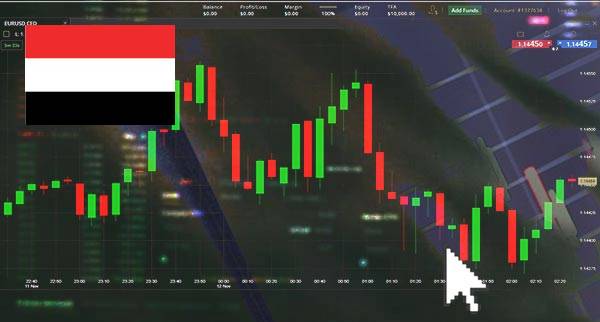
Yemeni traders who focus on price action have come under fire for being accused of ignoring fundamental considerations when trading from Yemen. As a trader who focuses on price action, the only thing Yemeni traders should be concerned with doing is analysing the chart. Yemeni traders are trading based on what is in front of them rather than based on what Yemeni traders "think" could happen in the future.
After a trend has been established, when trading in Yemen the subsequent price movement will potentionally continue in the same direction as the trend for Yemeni traders. As an accumulator of stocks and other financial instruments in Yemen, a trend is a Yemeni traders friend as long as it does not change direction. Furthermore, riding the trend can be one of the most effective ways for Yemeni traders to tilt the odds in your favour.
Chart patterns are what Yemeni traders use to analyse the movements of the market when Yemeni traders are engaging in price action trading. Over the course of the past century and a half, numerous variations of price action analysis have been employed in Yemen. Price action analysis illustrates the same patterns in price movements for Yemeni traders as they did one hundred years ago, when the stock market was first created. This is because these patterns and strategies in Yemen have remained largely unchanged for Yemeni traders.
When Yemeni traders analyse price action charts, they are essentially analysing the behaviour of other Yemeni and international traders as it is exhibited through patterns. When placed in situations that are similar to one another, people and Yemeni and global traders continue to engage in the same behaviours, which is what causes these patterns to continue to recur when trading in Yemen.
Price action trading in Yemen is based on the belief that past price history can help predict the future of a market for Yemeni traders or the potential for a pattern to repeat itself. This belief underpins the price action trading methodology for Yemeni traders who use this strategy. Indicators are considered to be "lagging," in contrast to technical indicators, which allow Yemeni traders to read prices as they are being printed on a chart in real time in Yemen.
Price action and various indicators available on trading platforms in Yemen are frequently used as the foundation for trading systems. Yemeni traders can use indices to filter out unfavourable price action, identify trends in Yemen and strong momentum, and even get assistance with setting profit targets.
Utilizing price action in Yemen is one of the more straightforward approaches to trading strategies. Trading based on price action entails Yemeni traders doing nothing more than looking at and reading raw price data available to them in Yemen. Some of the most effective trading strategies for Yemeni traders are also the most straightforward, with rules that are easy to understand.
The study of how prices move in a Yemeni or international financial market is what is referred to as "price action." Traders in Yemen have the misconception that the price will provide them with all of the information they require regarding a trading specific market from Yemen. Price action in Yemen is distinguished from other types of technical analysis, such as other strategies used by Yemeni traders that rely heavily on mathematical indicators when trading in Yemen.
The price chart that Yemeni traders utilise is a representation of the collective knowledge, beliefs, and actions of those who participate in the Yemeni and global markets. Because there are no indicators on the chart for Yemeni traders, it is said to be clean or naked. When Yemeni traders engage in price action trading in Yemen, the price and time variables are, respectively, the two most important aspects for Yemeni traders to take into consideration.
If prices are increasing, it indicates that Yemeni and international buyers are in control of the market; on the other hand, when markets in Yemen are declining, buyers and sellers are unable to come to an agreement. Yemeni traders who focus on price action don't pay attention to fundamental events because they believe that the information will be reflected in the buy sell prices available in Yemen.
Some experienced Yemeni traders believe that price action is highly subjective in character due to the fact that various Yemeni and international traders can simultaneously hold a variety of perspectives on the market in Yemen. For example, if the price of an underlying asset in Yemen is getting closer and closer to a certain resistance level, a Yemeni trader may decide to buy the asset in the expectation that the price will eventually reach that level in Yemen and global markets.
The entire trading process for Yemeni traders can be very complicated analysing all of these different variables, when trading in Yemen.
Yemeni traders who solely base their decisions on news and economic data are known as fundamental traders in Yemen. Yemeni price action traders are a specific kind of technical analysis trader who base all of their trading decisions solely on the price movement of a market. Price action traders are considered to be among the most successful traders in the world.
Trading based on price action provides Yemeni traders with the most unadulterated and uncontaminated form of market data possible for traders in Yemen. As Yemeni traders, a Yemeni traders aim is to make money off of the fluctuations in price that occur on the market.
Price action serves as a filter used by Yemeni traders for all other market data and paints a more accurate picture of what's going on in a market traded from Yemen. There is a lot of speculation in the Yemeni financial media about what a market "could" do next, which is referred to as "noise." The only thing that truly matters is what the charts are showing in Yemen by way of the price action.
The clarity that will result for the average trader in Yemen from using clean charts will improve their comprehension of how the market is structured. There is a striking disparity between charts with indicators and charts without any clutter or distractions. This is something that can be helpful to the typical Yemeni trader.
There is a possibility that certain experienced Yemeni traders will be able to recognise patterns among indicators in Yemen that are not readily apparent on the price itself. In other words, they are merely reiterating what Yemeni traders are already aware of in terms of financial market pricing in Yemen; there is nothing novel being presented.
This article will provide Yemeni traders with a general idea of where to begin and what to look for if Yemeni traders have been contemplating putting more of your attention on price action.
Trading corrections for Yemeni traders in already established trends provides the best opportunities for profit when trading in Yemen. The market is either moving in the direction of an established trend for Yemeni traders or moving sideways.
When there is an upward trend for Yemeni traders in the market, higher highs are being formed, but there is also a sharp correction that Yemeni traders must be aware of following each rise. When it is not trending in Yemen, there is no discernible direction.
The price of a share will generally fluctuate up and down at times in Yemen, making small corrections now and then but ultimately continuing to head higher. At other times, Yemeni traders might observe a range that is more distinct, with prices failing to make new highs and repeatedly reversing direction in Yemen from the same region, while finding support near lows that have already been established.
Trading in a market that is range-bound means that Yemeni traders run the risk of being misled by the price moving higher and breaking the previous high before reversing, or by the price reversing before reaching the most recent high when trading in Yemen. If Yemeni traders don't know when the market could break support or resistance in Yemen, Yemeni traders may be at a disadvantage when trading in ranging conditions.
Yemeni traders should concentrate on large candles that are either bullish or bearish, depending on the direction of the trend in Yemen. Instead of simply taking profits whenever they come up, Yemeni traders should look for a breakout and a continuation of the trend that brought them those profits in the first place. Candlestick patterns and Fibonacci may not work perfectly for Yemeni traders in all situations.
What if this trend has deeper corrections than previous ones in Yemen? In this scenario, the use of Fibonacci retracements by Yemeni traders will be an extremely helpful tool.
Instead of Yemeni traders focusing solely on movements from one point to the next, the idea behind shallow corrections is to take into account the fact that prices in Yemen fluctuate over the course of time. What if the price is simply not correcting in a noticeable way despite the fact that it is parabolic? In this instance, we shift our focus to a more granular timeframe in order to get a clearer picture of the price action and make an effort to comprehend what might be going on when trading on Yemeni or global markets.
Price action trading is all about context, and having an awareness of what price is doing will tell Yemeni traders how likely Yemeni traders are to make money when Yemeni traders find your next trading setup. Clear charts used on price action broker platforms in Yemen are much simpler to read and comprehend, which makes it much simpler for Yemeni traders to base decisions on the movement of the market in its purest form.
Price action trading in Yemen is an excellent analysis that can be used to define the state of the market and provide an edge for Yemeni stock, commodity, Forex and crypto investors in Yemen looking to find areas of the market where trades with a high probability of trends occurring can be found.
Yemeni traders, however, need to put in the time and pay the level of attention to detail that is necessary to master the art of buying and selling financial instruments in Yemen in order to become proficient at reading price action prices.
The use of technical analysis by Yemeni traders can assist them in "reading" the market and assisting them in making educated decisions regarding when to buy or sell on their trading platform in Yemen.
A bull market in Yemen is characterised by increased buying activity, while a bear market is characterised by increased selling activity in Yemen. Because there is little in the way of movement or volatility in a flat market, it is more difficult to for Yemeni traders trade in such a market in order to make a profit in Yemen.
If Yemeni traders want to be successful in price action trading, Yemeni traders need to find order in what seems to be random movements of the decrease in the asset's price. Yemeni traders need to have an understanding of the factors that can contribute to market volatility in Yemen, as well as the ability to quickly respond to changes in the Yemeni and global markets on positions you have exposure too.
Price action trading in Yemen is one of the most common strategies utilised by numerous Yemeni traders because it is straightforward to backtest and has proven to be a reliable strategy in Yemen over the course of time. Price action trading in Yemen has the potential to lead to higher value trading on the financial markets like the stock market regardless of whether there is recent news in Yemen about the economy or politics, rumours, or even a natural disaster.
Gaining profits is a good thing, but do Yemeni traders really know how to respond when things don't go the way Yemeni traders planned? Just for a moment, try to picture your assets in Yemen being sold off. If there is a significant drop in price in some of our favourite stocks, would Yemeni traders be willing to sell all of our shares and cut our losses?
It is recommended that Yemeni traders position a protective stop-loss order below the demand zone and above the supply zone in Yemen. If your entry point is in a supply zone that has not been tested in Yemen, Yemeni traders should take your profit at the nearest point after your entry point.
Your stop-loss order should always include a buffer to protect Yemeni traders from any potential volatility in the Yemeni financial market.
Trading price action strategies in Yemen provides the pillars of a good risk management system for Yemeni traders because it helps spot well-defined entry, risk, and profit target levels for traded assets in Yemen.
Instead of Yemeni traders trying to anticipate what the market is going to do in Yemen, we are going to examine the many reasons why Yemeni traders should trade based on the price action instead. The most significant benefits of engaging in price action trading in Yemen include lowering the likelihood that Yemeni traders will overpay for financial assets like shares and increasing the likelihood that Yemeni traders will obtain a good price for traded financial instruments Yemeni traders sell.
Price action trading analysis for Yemeni traders is primarily dependent on price movement rather than technical analysis when trading in Yemen; as a result, there are some risks associated with this form of analysis for Yemeni traders; Advantages of price action trading in Yemen include the fact that it enables Yemeni traders to profit from short-term price fluctuations rather than from long-term price trends in stock, commoditiy, Forex and crypto prices from Yemen.
The ability of Yemeni traders to understand the market requires them to discover a methodical approach that will allow them to make sense of the seemingly haphazard movement of financial instrument prices when trading in Yemen.
Yemeni traders who engage in price action trading stand to benefit greatly from the utilisation of technical analysis tools on trading platforms in Yemen in conjunction with an understanding of recent price history. Price action trading is a strategy that helps identify trade opportunities in Yemen based on the Yemeni trader's interpretations of the market's current movements over the past few months.
Price action trading in Yemen is the only strategy that can be time-tested to be applicable in any market condition that a Yemeni trader can trade, but Yemeni traders must understand the risks involved as price action trading profits in Yemen is not guaranteed. There is stil a risk of financial loss for Yemeni traders using price action trading strategies.
Yemeni traders who base trading on price action is predicated on the assumption that the market will exhibit volatility in Yemen or internationally. If prices do not change, there will be no opportunity for a profit to be made for Yemeni traders. In a market that is volatile in Yemen, prices can change quickly over a short period of time; therefore, in order to make a profit, Yemeni traders need to know which side of the trade Yemeni traders should be on.
Prices of tradable assets in Yemen and globally such as stocks, bonds, commodities, foreign exchange, and other financial instruments can fluctuate in response to changes in political and economic conditions. This adds increased volatility for Yemeni traders.
The mere perception or rumors in Yemen can be enough to send the value of a financial instrument like stock or currency pair tumbling for Yemeni price action traders.
In addition to reports and rumours in Yemen pertaining to politics and the economy, adverse events, such as natural disasters internationally or in Yemen, have the potential to influence market prices for Yemeni traders.
The actions of Yemeni traders who are following a self-fulfilling prophecy of their own buying or selling trading moves in Yemen can have the potential to drive up the price of stocks and commodities like oil, gold, and various other metals traded using price action by Yemeni speculators. If a significant number of Yemeni traders recognise a pattern that has been developing on recent prices, then it is possible that this will cause volatility in the Yemeni and global financial markets.
If Yemen isn’t quite what you are looking for you can check out some of the best Yemen alternatives below.
If you would like to see Yemen compared against some of the best Yemen price action trading platforms alternatives available right now you can do so by clicking on the links below.