

Adam Rosen - Lead financial writer
Trading on Kraken refers to the purchasing and selling of various types of financial products on the Kraken trading platform with the purpose of generating a profit and positive Kraken trading account balance. Kraken traders, trade on the speculation that the value of financial instruments will move in a predetermined way, beneficial to there Kraken trading positions and Kraken market exposure. Kraken instruments themselves are derived from a wide array of assets that are each given a fluctuating monetary value on global financial markets accesible using the Kraken trading software and tools.
Traders have access to a wide variety of financial markets via the Kraken trading platform, including foreign exchange (Forex), indices, commodities, stocks and CFDs. When you trade with Kraken, you will need to have a comprehensive understanding of risk management strategies when actively trading with Kraken. risk management trading features that can be accessed through the Kraken platform, such as stop loss and negative balance options should be readily understood and utilised when trading with Kraken.
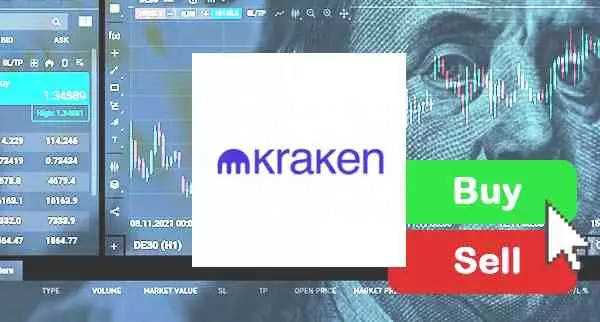
In the world of Kraken trading, a Kraken trade that has been established or entered but has not yet been closed with an opposing trade on Kraken is referred to as an open position. The actions of buying, selling, taking a long position, or taking a short position with Kraken can all result in an open position. In any event, your Kraken position will stay open until the completion of a trade in the opposite direction.
You have the option to toggle between Amount and Units whenever you open a trade on Kraken. This allows you to enter the dollar value that you want to invest in a particular asset using Kraken. The number of units you are purchasing using Kraken will be displayed in the Open Trade window based on the price of the asset at the time the trade was opened with Kraken.
You can change the order of the instruments in your Kraken trading account by double-clicking or right-clicking on them. When the price reaches either the 'Take Profit' or the 'Stop Loss level' on Kraken, any open Kraken positions will be closed. The same holds true for Kraken pending orders, each of which has a predetermined termination date.
If the market moves against you and your Kraken account margin level percent reaches a certain level, Kraken has the option to close any open positions on your Kraken account. This causes a Kraken margin call to be issued, and if further losses occur, the Kraken account could reach the liquidation level. In order to minimise the additional risk to your Kraken account, your position with the greatest loss will be liquidated first.
A Kraken investor is said to have market exposure when they have an open position on Kraken. The only way to completely remove the risk is to close all Kraken open positions. In order to close a short position on Kraken, it is necessary to buy back financial instruments. Selling long positions is required in order to close out Kraken long positions. It's possible to fill an Kraken open position in as little as a few minutes or as much as a few years, depending on the approach and the goal when trading on the Kraken platform.
A stop-loss order is an order that is placed with Kraken to buy or sell a specific financial instrument once the price has reached a certain level on Kraken. When the price reaches that level, the stop-loss order is executed by Kraken. According to the financial regulators that monitor Kraken, the order is intended to put a cap on the amount of money an Kraken investor can lose on a particular financial position.
In the Kraken 'Order' window, you have the ability to make extensive changes to your Kraken order, beginning with the order volume (lot size) and continuing with the configuration of a Kraken 'Stop Loss' or Kraken 'Take Profit'. In the event that the stop-loss or take-profit price is currently too close to the current price, the message "Invalid S/L or T/P" will appear on the Kraken trading screen.
You can select a different trading instrument from the Kraken list that is accessible via a drop-down menu in the Symbol field. The Kraken buy limit, the Kraken sell limit, the buy stop, and the sell stop can all be set for Kraken pending orders. To submit, click the "Place" button on Kraken, and you will see a message confirming that the Kraken order has been carried out.
When talking about financial transactions on Kraken, "closing a position" refers to carrying out a trade that is the polar opposite of an Kraken open position. This cancels out the Kraken open position and gets rid of the initial Kraken exposure. A long position in a security on Kraken would need to be closed by selling the security, whereas a short position would need to be closed by purchasing the security again on Kraken.
Selling assets through Kraken is a simple process.
You are able to partially close positions on Kraken. Simply decrease the Kraken trading volume in the 'Order' window until it corresponds to the amount you desire. You can also set or modify Kraken 'Take Profit' or 'Stop Loss' levels by clicking on the order price level on the chart and dragging it to the preferred price level on Kraken. This allows you to set or modify Kraken 'Take Profit' or 'Stop Loss levels'.
You have the option to close the Kraken trade, modify the Kraken order, or add a Kraken trailing stop when you right-click on the trade while it is displayed in the Kraken trading screen or in the chart. The price that appears after the column labelled "Symbol" is the price at which you actually executed the Kraken trade.
The purpose of the Kraken trading discipline known as technical analysis is to analyse investments and locate potential trading opportunities using Kraken trading tools. Technical analysis, focuses on using Kraken to study price and volume rather than fundamental analysis, which attempts to evaluate the value of a security using Kraken based on business results such as sales and earnings. Fundamental analysis is more common on Kraken. The historical trading activity and price fluctuations of a security are analysed by Kraken traders.
Kraken tools used in technical analysis are put to use in order to investigate how changes in supply and demand for a Kraken security will have an impact on shifts in price, volume, and implied volatility. It is based on the premise that the researched Kraken trading activity and price changes of a security in the past can be valuable Kraken indicators of the price movements of the security in the future.
The study of patterns and signals on Kraken, that can be used to forecast price movements and to trade with Kraken on those movements is known as technical analysis. While the primary purpose of some Kraken market indicators is to identify the current market trend, the primary purpose of other market indicators on Kraken is to determine the strength of a trend. Kraken charting tools such as trendlines, channels, moving averages, and momentum indicators are utilised frequently on Kraken.
The most common types of technical trading indicators used on Kraken include price trends, chart patterns, Kraken volume and momentum indicators, Kraken moving averages, support and resistance levels, and oscillators.
You should experiment with different Kraken graphs, interface layouts, and shortcuts whenever you trade using Kraken on a desktop computer, a laptop computer, or a mobile device. If you are just starting out with Kraken, it is strongly recommended that you begin by practising on a Kraken demo account. This will give you the opportunity to get a sense of the Kraken tools that you prefer to use and the Kraken configuration that works best for you.
You will be required to go to the website of the Kraken brokerage that you will be trading with in order to complete the Kraken registration process for a new Kraken trading account. This includes your first and last name, as well as your address, email address, and other contact information. In addition to providing Kraken some responses to some questions, you will be required to choose a password for your Kraken account.
Trading can take many different forms with Kraken, but they all carry the inherent risk of losing money that was initially invested with Kraken. The first and most important rule of trading with Kraken is that you should never trade or invest with money with Kraken that you cannot afford to lose. That implies that the funds you deposit into your new Kraken trading account are the discretionary funds you have remaining after paying all of your bills.
After you have created a Kraken new username and password, you will be able to access your newly opened Kraken brokerage account by logging in to the respective Kraken broker's website using those details. You can also take advantage of the Kraken demo account, which enables you to trade in real market conditions using Kraken virtual funds without running the risk of losing real money with Kraken.
The opening of a Kraken brokerage account is a very straightforward process. You will be required to present a valid form of identification to Kraken as well as a valid form of residence before your identity can be verified by Kraken. You will also be required to provide a recent bank statement or utility bill to Kraken in which your full name and address are presented in a legible manner.
After establishing a Kraken trading account and confirming your identity, you will have complete access to your Kraken account immediately. Your initial Kraken trading balance payment is the only thing that needs to be completed before you can get started. You will find that all of the top brokers like Kraken support a variety of deposit options from which you can select. Available Kraken funding and withdrawal methods including
Kraken allows traders to trade more than 100 different financial instruments, including . Kraken investors and traders all over the world now have access to a wider variety of trading instruments than ever before. This trend is expected to continue in the foreseeable future with brokers like Kraken.
Kraken investors are able to buy and sell shares of various companies through the stock market. Kraken offers access to a network of markets like the stock market where companies can list their shares and other securities for sale and purchase on Kraken. Kraken traders can trade US stocks, UK stocks and other international stocks, including trading stocks on Kraken using CFD leverage.
Buying and selling of a particular stock market index on Kraken is what "index trading" refers to as a definition of "index trading." The performance of a group of stocks is typically represented by an index on the Kraken platform. The value of an index increases on Kraken whenever the prices of the individual shares that make up the index rise. If, on the other hand, prices go down, the value of the index will go down as well on Kraken.
The foreign exchange market available on Kraken, makes it possible to trade one currency for another of different countries' currencies. Always traded in pairs, there are a wide variety of possible currency combinations on Kraken. Forex currency pairs on Kraken include major, minor and exotic currency pairs. however, only a select Kraken currency pairs are considered to be highly liquid on Kraken.
Kraken offers a wide range of tradable commodities. The term "hard commodities" refers to natural resources on Kraken, while the term "soft commodities" refers to goods produced by livestock or agriculture, such as meat and dairy products which are available to trade using Kraken.
Kraken also offers access to ETF trading. ETFs are investing vehicles available on Kraken, that cover a wide range of markets, sectors, industries, currencies, and commodities. These ETF funds can be bought and sold quickly on Kraken or held for an extended period of time, trading similarly to stocks on Kraken.
Kraken offers CFD trading in certain countries where financial regulators permit Kraken CFD trading. A contract for differences, also known as a CFD, is an arrangement made in the trading of financial derivatives on Kraken in which the cash-settled differences in the settlement between the open and closing trade prices on Kraken. A Kraken contract for difference (CFD) is speculation on price movement up or down against Kraken and does not involve the delivery of any physical goods or securities.
Kraken CFD trading is high risk and has a high percentage of losing traders due to the ability to trade at up to x3 or x20 the Kraken traders deposited amount. Kraken CFD gains may be great but so may the losses.
Fraudulent activities in the trading industry have prompted financial regulators to increase their oversight of brokers and trading platforms like Kraken. According to the country in which they Kraken traders are active, the various regulatory bodies each have their own unique set of regulations and methods of enforcement that Kraken must adhere too to service traders in those countries. As a Kraken customer, you need to exercise extreme caution in order to make certain that the people with whom you are transacting are well financially regulated. Kraken is regulated by FSA AUSTRAC, FINTRAC, FinCEN, FCA,.
Kraken Financial Regulation: FCA, FinCEN, FINTRAC, AUSTRAC, FSA
🤴 Kraken is Used By: 10,000
💵 What You Can Trade with Kraken: Cryptocurrency, Copy Trading, NFT
💵 Instruments Available with Kraken: 100
📈 Kraken Inactivity Fees:
💰 Kraken Withdrawal Fees: No
💰 Kraken Payment Methods:
💰 Kraken Account Base Currencies:
Kraken Risk warning : Your capital is at risk

IC Markets Financial Regulation: Australian Securities and Investments Commission (ASIC), Financial Services Authority (FSA), Cyprus Securities and Exchange Commission (CySEC)
🤴 IC Markets is Used By: 180,000
💵 What You Can Trade with IC Markets: Forex, Majors, Energies, Metals, Agriculturals,
💵 Instruments Available with IC Markets: 232
📈 IC Markets Inactivity Fees: No
💰 IC Markets Withdrawal Fees: No
💰 IC Markets Payment Methods: Credit Cards, VISA, MasterCard, Debit Cards, Visa, MasterCard, Bank Transfer, PayPal, Neteller, Neteller VIP, Skrill, Poli, Cheque, BPAY, UnionPay, FasaPay, QIWI, RapidPay, Klarna, Electronic wallets (eWallets), Broker to Brokers, Thai Internet Banking, Vietnamese Internet Banking,
💰 IC Markets Account Base Currencies: USD, GBP, EUR, CHF, JPY, SGD, AUD, CAD, HKD, NZD
IC Markets Risk warning : Losses can exceed deposits
Roboforex Financial Regulation: RoboForex Lid is regulated by Belize FSC, License No. 000138/7, reg. number 000001272
🤴 Roboforex is Used By: 10,000
💵 What You Can Trade with Roboforex: Forex, Minors, Majors, Exotics, Indices, Metals,
💵 Instruments Available with Roboforex: 100
📈 Roboforex Inactivity Fees: No
💰 Roboforex Withdrawal Fees: Yes
💰 Roboforex Payment Methods: Credit cards, VISA, MasterCard, JCB, Debit cards, Bank Transfer, Electronic wallets (eWallets), Neteller, Skrill, Perfect Money, AdvCash, BPAY, China UnionPay, FasaPay, CashU, WeChat Pay, ecoPayZ, AstroPay, Sofort, Giropay, Poli, Wepay, iDEAL, Payoneer,
💰 Roboforex Account Base Currencies: USD, EUR, XAU
Roboforex Risk warning : Losses can exceed deposits
AvaTrade Financial Regulation: Central Bank of Ireland, Australian Securities and Investments Commission (ASIC), Financial Services Authority (FSA), South African Financial Sector Conduct Authority (FSCA), Financial Stability Board (FSB), Abu Dhabi Global Markets (ADGM), Financial Regulatory Services Authority (FRSA), British Virgin Islands Financial Services Commission (BVI)
🤴 AvaTrade is Used By: 200,000
💵 What You Can Trade with AvaTrade: Forex, Minors, Cryptocurrencies, Majors, Exotics, Indices, UK Stocks, US Stocks, Energies, Metals, Agriculturals, ETFs, IPO, Bonds,
💵 Instruments Available with AvaTrade: 1000
📈 AvaTrade Inactivity Fees: No
💰 AvaTrade Withdrawal Fees: No
💰 AvaTrade Payment Methods: Credit cards, VISA, MasterCard, Bank Transfer, Electronic wallets (eWallets), PayPal, Neteller, WebMoney, Payoneer,
💰 AvaTrade Account Base Currencies: USD, GBP, EUR, JPY, AUD
AvaTrade Risk warning : 71% of retail CFD accounts lose money
FP Markets Financial Regulation: Australian Securities and Investments Commission (ASIC), Cyprus Securities and Exchange Commission (CySEC), Financial Services Authority (St. Vincent and the Grenadines)
🤴 FP Markets is Used By: 10,000
💵 What You Can Trade with FP Markets: Forex, Minors, Majors, Exotics, Indices, Metals,
💵 Instruments Available with FP Markets: 100
📈 FP Markets Inactivity Fees: No
💰 FP Markets Withdrawal Fees: No
💰 FP Markets Payment Methods: Credit cards, VISA, MasterCard, Debit cards, Bank Transfer, Electronic wallets (eWallets), Neteller, BPAY, POLi, PayPal, Neteller, Skrill, PayTrust, NganLuong VN, Fasapay, Broker to Broker, OnlinePay China, Directa24, Klarna, PayTrust88, Payoneer,
💰 FP Markets Account Base Currencies: USD, GBP, EUR, CHF, JPY, SGD, AUD, CAD, HKD, NZD
FP Markets Risk warning : Losses can exceed deposits
NordFX Financial Regulation: Cyprus Securities and Exchange Commission (CySEC), License No: 209/13
🤴 NordFX is Used By: 10,000
💵 What You Can Trade with NordFX: Forex, Majors, Metals,
💵 Instruments Available with NordFX: 50
📈 NordFX Inactivity Fees: No
💰 NordFX Withdrawal Fees: No
💰 NordFX Payment Methods: Bank Transfer, Neteller, PerfectMoney, WebMoney, FasaPay, CashU, Payza, QIWI,
💰 NordFX Account Base Currencies: USD, EUR
NordFX Risk warning : Losses can exceed deposits
XTB Financial Regulation: Financial Conduct Authority (FCA), FCA number FRN 522157, Cyprus Securities and Exchange Commission (CySEC), CySEC Licence Number: 169/12, Comision Nacional del Mercado de Valores, Komisja Nadzoru Finansowego, Belize International Financial Services Commission (IFSC) under license number IFSC/60/413/TS/19, Polish Securities and Exchange Commission (KPWiG), Dubai Financial Services Authority (DFSA), Dubai International Financial Center (DIFC),Financial Sector Conduct Authority (FSCA), XTB AFRICA (PTY) LTD licensed to operate in South Africa
🤴 XTB is Used By: 250,000
💵 What You Can Trade with XTB: Forex, Minors, Cryptocurrencies, Majors, Exotics, Indices, UK Stocks, US Stocks, Pennystocks, Energies, Metals, Agriculturals, ETFs,
💵 Instruments Available with XTB: 4000
📈 XTB Inactivity Fees: Yes
💰 XTB Withdrawal Fees: No
💰 XTB Payment Methods: Credit cards, MasterCard, Maestro, Visa, Debit cards, Bank Transfer, Electronic wallets (eWallets), PayPal, Neteller, Skrill, Poli, Paysafe, Payoneer,
💰 XTB Account Base Currencies: USD, GBP, EUR
XTB Risk warning : 76% - 83% of retail investor accounts lose money when trading CFDs with this provider. You should consider whether you understand how CFDs work and whether you can afford to take the high risk of losing your money.

Pepperstone Financial Regulation: Financial Conduct Authority (FCA), Australian Securities and Investments Commission (ASIC), Cyprus Securities and Exchange Commission (CySEC), Federal Financial Supervisory Authority (BaFin), Dubai Financial Services Authority (DFSA), Capital Markets Authority of Kenya (CMA), Pepperstone Markets Limited is incorporated in The Bahamas (number 177174 B), Licensed by the Securities Commission of the Bahamas (SCB) number SIA-F217
🤴 Pepperstone is Used By: 89,000
💵 What You Can Trade with Pepperstone: Forex, Minors, Cryptocurrencies, Majors, Exotics, Indices, Energies, Metals,
💵 Instruments Available with Pepperstone: 100
📈 Pepperstone Inactivity Fees: Yes
💰 Pepperstone Withdrawal Fees: No
💰 Pepperstone Payment Methods: Credit cards, VISA, MasterCard, Debit cards, Bank Transfer, Electronic wallets (eWallets), PayPal, Neteller, BPAY, POLi, UnionPay, FasaPay, QIWI, Payoneer,
💰 Pepperstone Account Base Currencies: USD, GBP, EUR, CHF, JPY, SGD, AUD, CAD, NZD, HKD
Pepperstone Risk warning : CFDs are complex instruments and come with a high risk of losing money rapidly due to leverage. Between 74-89 % of retail investor accounts lose money when trading CFDs. You should consider whether you understand how CFDs work and whether you can afford to take the high risk of losing your money
XM Financial Regulation: Financial Services Commission (FSC), Cyprus Securities and Exchange Commission (CySEC), Australian Securities and Investments Commission (ASIC)
🤴 XM is Used By: 10,000,000
💵 What You Can Trade with XM: Forex, Stock CFDs, Commodity CFDs, Minors, Majors, Exotics, Equity Indices CFD, Energies CFD, Precious Metals
💵 Instruments Available with XM: 1000
📈 XM Inactivity Fees: Yes
💰 XM Withdrawal Fees: No
💰 XM Payment Methods: Credit cards, Debit cards, Bank Transfer, Electronic wallets (eWallets), Moneta, ABAQOOS, PRZELEWY24, Neteller, PerfectMoney, WebMoney, UnionPay, FasaPay, CashU, Payza, QIWI, SOFORT, Giropay, Payoneer, Skrill,
💰 XM Account Base Currencies:
XM Risk warning : CFDs are complex instruments and come with a high risk of losing money rapidly due to leverage. 77.74% of retail investor
accounts lose money when trading CFDs with this provider. You should consider whether you understand how CFDs work and whether you can afford
to take the high risk of losing your money.

eToro Financial Regulation: Financial Conduct Authority (FCA), Cyprus Securities and Exchange Commission (CySEC), Markets In Financial Instruments Directive (MiFID), Australian Securities and Investments Commission (ASIC)
🤴 eToro is Used By: 20,000,000
💵 What You Can Trade with eToro: Forex, Minors, Cryptocurrencies, Majors, Exotics, Indices, UK Stocks, US Stocks, Energies, Metals, Agriculturals, ETFs,
💵 Instruments Available with eToro: 2000
📈 eToro Inactivity Fees: Yes
💰 eToro Withdrawal Fees: Yes
💰 eToro Payment Methods: Credit cards, VISA, MasterCard, Maestro, Debit Cards, Bank Transfer, PayPal, Neteller, Skrill, WebMoney, Giropay, eWallets,
💰 eToro Account Base Currencies: USD
eToro Risk warning : 51% of retail investor accounts lose money when trading CFDs with this provider.
FXPrimus Financial Regulation: Cyprus Securities and Exchange Commission (CySEC), Markets In Financial Instruments Directive (MiFID), Vanuatu Financial Services Commission (VFSC)
🤴 FXPrimus is Used By: 10,000
💵 What You Can Trade with FXPrimus: Forex, Minors, Majors, Exotics, Indices, UK Stocks, US Stocks, Energies, Metals,
💵 Instruments Available with FXPrimus: 130
📈 FXPrimus Inactivity Fees: No
💰 FXPrimus Withdrawal Fees: Varies
💰 FXPrimus Payment Methods: Credit cards, VISA, MasterCard, Debit cards, Bank Transfer, Electronic wallets (eWallets), Neteller, Skrill, Payoneer, SafeCharge, TrustPay, EmerchantPay, Bitcoin, UnionPay, FasaPay, Giropay,
💰 FXPrimus Account Base Currencies: USD, GBP, EUR, SGD, PLN
FXPrimus Risk warning : Losses can exceed deposits

easyMarkets Financial Regulation: Cyprus Securities and Exchange Commission (CySEC), Australian Securities and Investments Commission (ASIC), Financial Services Authority (FSA), British Virgin Islands Financial Services Commission (BVI)
🤴 easyMarkets is Used By: 142,500
💵 What You Can Trade with easyMarkets: Forex, Minors, Cryptocurrencies, Majors, Exotics, Indices, Energies, Metals, Agriculturals, Options,
💵 Instruments Available with easyMarkets: 200
📈 easyMarkets Inactivity Fees: No
💰 easyMarkets Withdrawal Fees: No
💰 easyMarkets Payment Methods: Credit cards, MasterCard, Maestro, American Express, JCB, Astropay, Debit cards, Bank Transfer, SOFORT, GiroPay, iDeal, Bpay, Electronic wallets (eWallets), Skrill, Neteller, WebMoney, UnionPay, WeChatPay, FasaPay, STICPAY,
💰 easyMarkets Account Base Currencies: USD, GBP, EUR, CHF, JPY, SGD, AUD, CAD, CNY, CZK, HKD, ILS, MXN, NOK, NZD, PLN, SEK, TRY, ZAR
easyMarkets Risk warning : Your capital is at risk
If Kraken isn’t quite what you are looking for you can check out some of the best Kraken alternatives below.
If you would like to see Kraken compared against some of the best Kraken alternatives available right now you can do so by clicking on the links below.